


Starting Seeds Inside

This is an older post from my old blog. The original publish date was March 11 2020. I'm slowing move over my old posts to the new blog so there may be some duplicate post topics. I did post another article on seed starting on March 6 2026. Similar ideas and some new thoughts in this post.
What seeds need to be started inside: tomatoes, peppers, most flowers, onions, cabbage, celery, most herbs, eggplant, and kohlrabi. Pumpkins, winter squash, zucchini, and cucumbers can either be started indoors or directly seeded.
When to start seeds: the back of the seed packets have tons of information that will help you decide when to start seeds. What I like doing is getting a calendar and marking the day that should be last frost day as week 1 and than going backwards so April 1 would be around week 8. How do you know when the last frost date is? The Almanac has good information.
There are seven things you need to start seeds: a table/shelving unit, grow lights, potting mix, trays, seeds, fans, and pots. If you're only started a few varieties than a table would be fine, but if you want to start a lot a shelving unit would be ideal. I bought my shelving units from Costco (make sure you don't get the adjustable ones, they are horrible) and Home Depot. They are plastic, allow air circulation, and clean easily. I bought my grow lights from Amazon. Third you want potting mix, this article gives a good explanation of what you need. Where to get seeds? Check out this post. Pots and trays you can get from a Dollar store or any big box store. Make sure the tray doesn't have any holes in it. Bottom watering is really important in getting seeds to sprout and emerge.
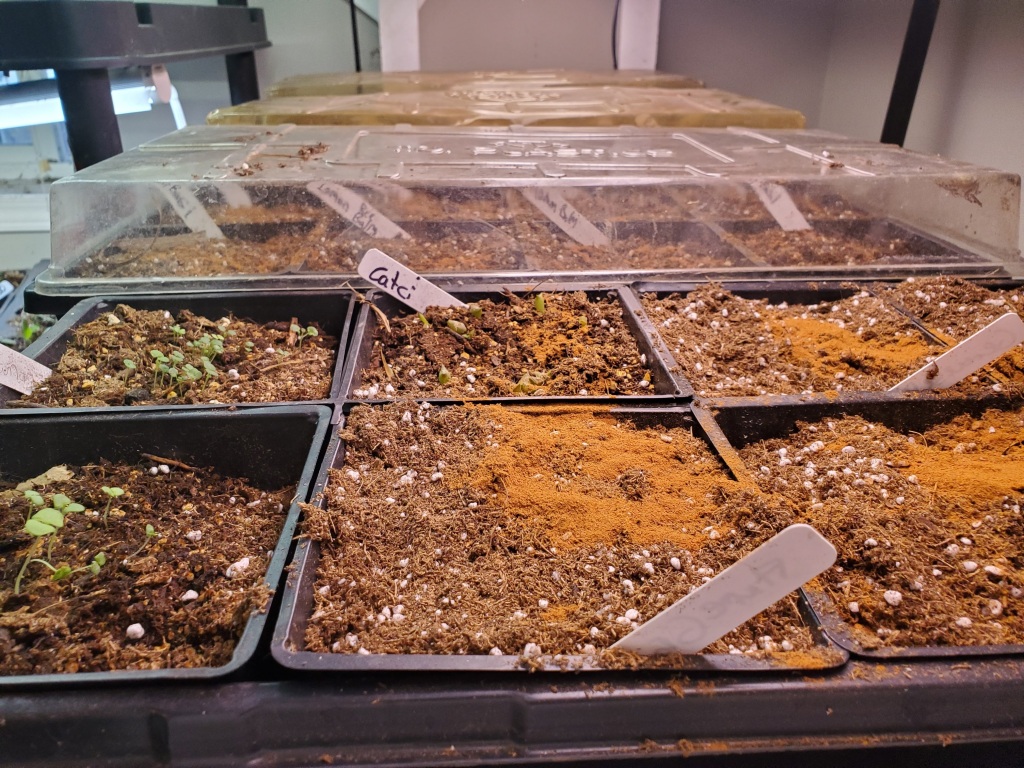
Once you have all your supplies the fun part starts, putting the seeds into the soil. Again the seed packet should have good information on how to plant your seeds. The basics are full up your pot 3/4 full of soil, sprinkle the seeds on top, and cover the seeds with soil. Put water in the tray, you don't want to water the top of the soil this can cause the seeds to shift and later on can cause disease. I use domes to keep the moisture and heat in. It's not necessary, but handy. You can also use saran wrap. Lights need to be 6"-24" away from seedlings, it all depends on what kind of lights you use. Lights ideally should be on for 16 hours a day. You can buy timers that will turn your lights on and off so you don't have to remember to do it. The other important thing is to have good air circulation. I have 3 fans going in my plant room. I really like these fans. They are small and can clip onto the shelving pole.
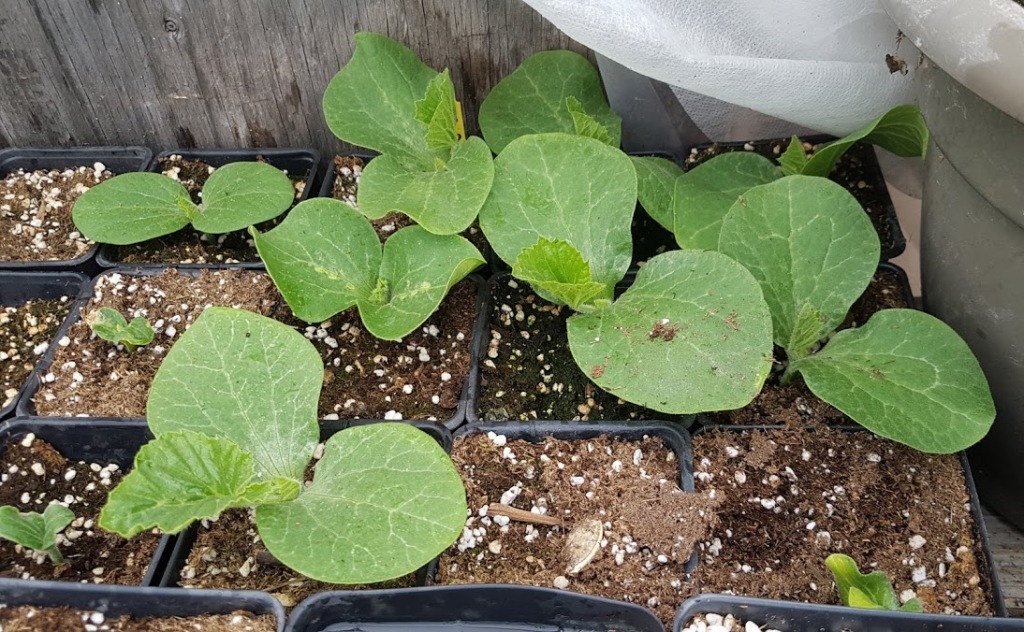
Once the seedlings have 3 to 4 true leaves you can repot them into a bigger container. This will allow the seedling to continue growing. The hardest part is transitioning the plants outside. This article has good information on hardening your plants. Once your plants have hardened off and their is no frost in the forecast you can plant them outside.


Comments