


Starting Seeds Indoors

This is an older blog post that I started on my old blog.
In this post I described everything you need to start seeds inside. Now that you have everything for seed starting what's next? When do you start seeds? How can you make sure you have successful germination and strong healthy seedlings.
When to start seeds? Most seed packets will give you information on when to start seeds. To know what frost date in your area is, use this site to find out. I'm in zone 3 and start things earlier than most people because I sell plants so it's kind of hard to tell people when to start things. People like big plants, which is not necessarily the best plants to plant, to put in their garden, but I sell what people want. I start super hot peppers, oregano, thyme, onions, celery, some basils, and parsley the first week of March, and hot and sweet peppers, tomatoes, eggplants, and some basils middle of March. The first of April I start cabbage. Middle of April I start some lettuces and May 1st I start my pumpkins, winter squash, cucumbers, and summer squash. Flowers are too complicated to give start days. There are so many and they all have various start dates, the internet will help you decide when to start them.
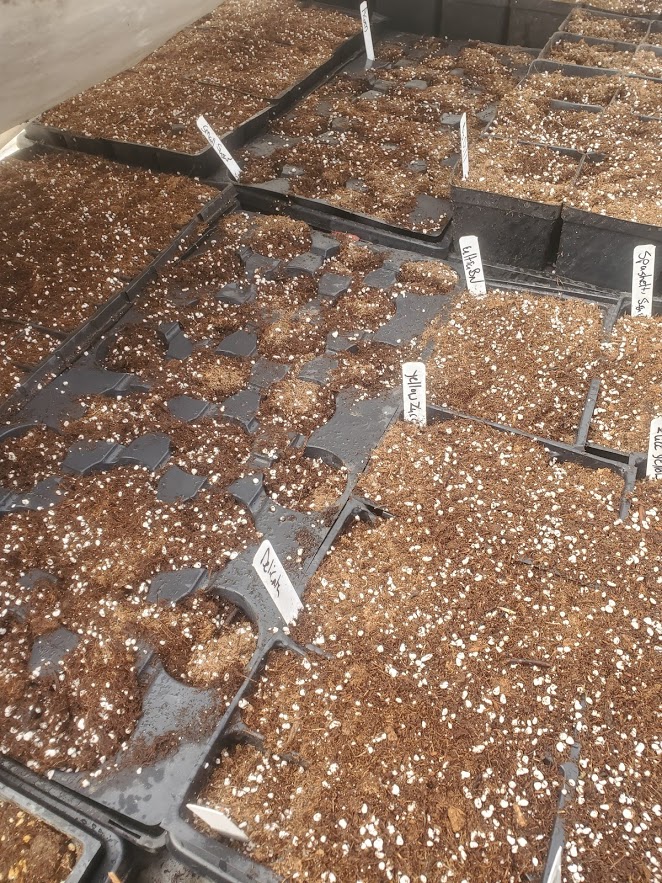
I fill up my containers/pots 3/4 full and than sprinkle a little bit of cinnamon on top. I use cinnamon to stop dampening off (I will write an article later on dampening off). I than put the seeds on top and cover with the correct amount of soil. Fine seeds need just a dusting of soil, some seeds need light to germinate, and some seeds need to be in complete darkness to germinate. Most seed packets will give you information and if you're not sure search the internet has tons of information. Vegetable seeds generally need soil on top. Flower seeds are finicky and difficult creatures. In general, seeds should be planted at a depth of two times the width, or diameter, of the seed. Some people will pre soak there trays before seeding, this is a good idea as it will allow the soil to settle.
Once everything is seeded I put the trays on either a heating mat or on a different shelf with no heating mat. I cover my trays with clear plastic domes. Most vegetable seeds can benefit from being on a heating mat, flowers are a completely different story. Trays and later on seedlings (plants) should be 2-6" from a light source and lights should be on 16 hours a day. A timer works well for making sure 16 hours of light is done. Trays should be checked daily to see if trays are wet enough or if diseases are starting. Damping off is quite common. I don't use chemicals so I try to combat it with cinnamon and with putting chamomile tea bags in my watering jug.
It is really important to water from the bottom. This is is done to prevent diseases, washing seeds and seedlings out of rows, or covering or uncovering seeds. I fill several jugs with water and let them sit for a couple of days before using them. I have cats and Costco used to sell their litter in a perfect jug for watering. I filled several of them, as I go through 1-2 jugs a day and I want them to sit for a couple of days. One big no no is to use soften water, soften water can damage the soil and cause nutrient problems. Using rain water is also a big no no, for more information this article explains soften vs hard vs rainfall water. This is also a good article on rain water. I haven't found a solution on the internet if you have soften water. Living in a condo I'm assuming I don't have soften water, but it is treated hence I let it sit for a couple of days.
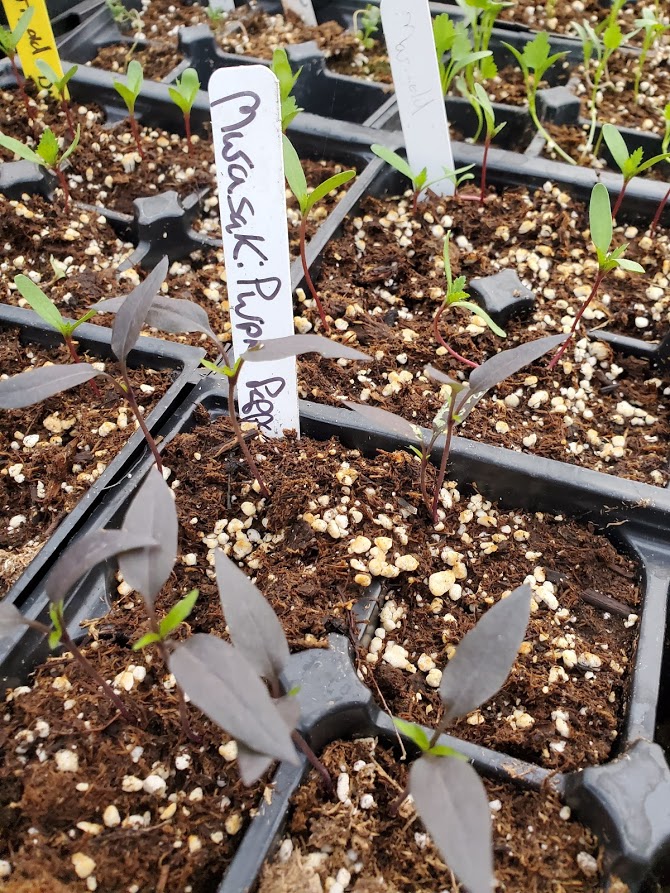
Once the seeds germinate and the seedlings take off you want to transplant them into a bigger pot. I go from 6" by 6" squares to 6 cell packs. When do you transplant/pot up? When the seedlings have developed their second set of true leaves, it's time to transplant or thin them. I transplant when the squares look crowded and the seedlings are strong enough to be manhandled.
Once the seedlings are transplanted/potted up it is important to watch moisture levels, have a fan (a gentle breeze) blowing near them, and watch for diseases. Now that you have healthy and happy plants, what's next?
If you have a greenhouse you can move them in when the weather stays above freezing or you have a heater in the greenhouse. I typically move in April 1 to April 15. One important thing to note is that plants can get sunburnt. They are use to artificial conditions and you will need to get them use to natural conditions. Most places suggest bringing plants into the greenhouse for a couple hours the first day, than bringing them back inside and gradually increase the amount of time spent in the greenhouse over the week. I just put my trays into the greenhouse and tell them sink or swim. Having over 60 trays, 2 flights of stairs, and arthritis in both knees when my trays are in the greenhouse they're staying put. I haven't used shade cloth in the past, but will this year to prevent sunburnt. I also put the trays under a bench for a day and than move them up top of the bench. In my greenhouse I have fans going, propane heat at night, water barrels, and electric heat.
If you don't have a greenhouse you will want to harden off your seedlings. It is a rather complicated process so I'll go into detail on another post on how to do it properly. Once your seedlings are harden off and there is no frost in the forecast it's time to plant them out. Make sure you choose a warm (not hot) and calm day. Happy gardening!


Comments